
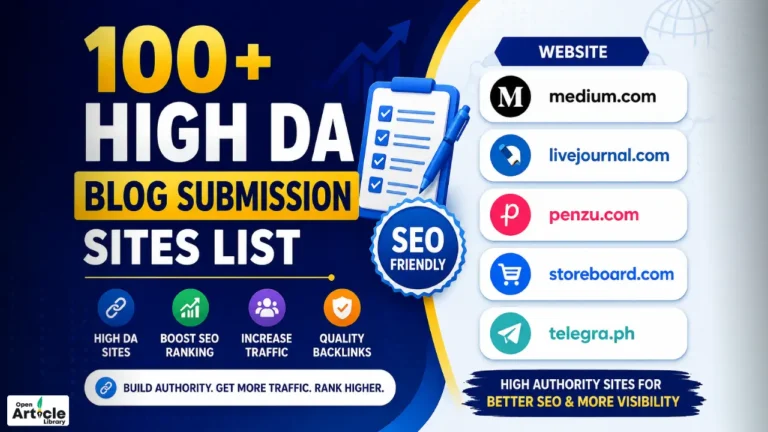
In digital marketing, businesses and bloggers are constantly looking for effective ways to increase organic traffic and earn relevant backlinks.
Blog submission can be a useful strategy when approached strategically, with a focus on quality content rather than quantity.
Whether you’re a small business owner or an SEO professional, using blog-sharing platforms can help expand your online reach and connect your content with a wider audience.
When combined with best SEO practices, it can support your overall content promotion and link-building efforts.
What Are Blog Sharing Sites in SEO?
Blog submission sites are online platforms or directories where businesses can publish articles, share website content, or list their pages to create backlink opportunities.
These platforms can help your content reach a wider audience, generate referral traffic, and make it easier for users to discover your website.
Publishing content on relevant platforms is considered an off-page SEO technique because it helps promote your website beyond your own domain.
When you choose high-authority websites that are relevant to your niche, your content can gain greater exposure while contributing to a diverse backlink profile and overall search visibility.
List of Popular Blog Sharing Sites
| Website | DA | PA | Spam Score |
| medium.com | 95 | 85 | 1 |
| livepositively.com | 61 | 41 | 1 |
| writefreely.org | 40 | 54 | 5 |
| fuzia.com | 44 | 50 | 1 |
| theomnibuzz.com | 59 | 52 | 4 |
| zupyak.com | 54 | 52 | 8 |
| livejournal.com | 59 | 67 | 1 |
| peerlist.io | 38 | 47 | 1 |
| write.as | 66 | 62 | 1 |
| penzu.com | 75 | 68 | 6 |
| articlesforwebsite.com | 38 | 48 | 2 |
| telegra.ph | 93 | 74 | 21 |
| crivva.com | 38 | 38 | 6 |
| fortunetelleroracle.com | 48 | 54 | 2 |
| storeboard.com | 68 | 60 | 3 |
| pitchwall.co | 49 | 48 | 5 |
| writeupcafe.com | 62 | 55 | 2 |
| popularticles.com | 40 | 48 | 3 |
| dev.to | 84 | 69 | 5 |
| evernote.com | 92 | 78 | 3 |
| substack.com | 92 | 78 | 7 |
| postach.io | 60 | 57 | 2 |
| hoomet.com | 41 | 47 | 7 |
| storify.me | 32 | 41 | 3 |
| linkedin.com | 99 | 100 | 1 |
| myarticles.io | 31 | 39 | 1 |
| gotartwork.com | 55 | 54 | 4 |
| buymeacoffee.com | 83 | 63 | 1 |
| joyrulez.com | 42 | 51 | 1 |
| articleseen.com | 31 | 42 | 7 |
| demo.wowonder.com | 50 | 53 | 1 |
| patreon.com | 91 | 72 | 5 |
| reddit.com | 92 | 89 | 3 |
| insta.tel | 35 | 47 | 5 |
| apsense.com | 76 | 59 | 7 |
| kahkaham.net | 38 | 43 | 3 |
| bloggeries.com | 41 | 46 | 9 |
| leenkup.com | 38 | 46 | 9 |
| sooperarticles.com | 63 | 56 | 3 |
| vocal.media | 77 | 62 | 8 |
| posteezy.com | 49 | 57 | 1 |
| anotepad.com | 60 | 64 | 2 |
| articletrunk.com | 27 | 45 | 2 |
| sites.google.com | 96 | 85 | 1 |
| blogger.com | 91 | 85 | 1 |
| bresdel.com | 47 | 53 | 15 |
| tumblr.com | 77 | 99 | 1 |
| deviantart.com | 75 | 67 | 6 |
| articlesneed.com | 54 | 41 | 8 |
| articlebiz.com | 46 | 53 | 5 |
| over-blog.com | 27 | 51 | 1 |
| justpaste.it | 91 | 67 | 22 |
| merchantcircle.com | 79 | 62 | 2 |
| wakelet.com | 74 | 68 | 1 |
| gumroad.com | 90 | 74 | 3 |
| dribbble.com | 92 | 85 | 7 |
| pearltrees.com | 85 | 65 | 33 |
| bloginder.com | 27 | 45 | 2 |
| bloglovin.com | 93 | 76 | 14 |
| wattpad.com | 92 | 70 | 3 |
| scoop.it | 92 | 71 | 5 |
| wordpress.com | 94 | 100 | 1 |
| weebly.com | 55 | 65 | 1 |
| wix.com | 72 | 93 | 1 |
| strikingly.com | 86 | 66 | 1 |
| jimdo.com | 44 | 54 | 1 |
| stck.me | 47 | 52 | 1 |
| pixieset.com | 68 | 69 | 1 |
| site123.com | 57 | 57 | 1 |
| diigo.com | 91 | 71 | 2 |
| dzone.com | 84 | 66 | 1 |
| party.biz | 49 | 53 | 5 |
| padlet.com | 87 | 74 | 1 |
| start.me | 70 | 59 | 7 |
| webhitlist.com | 48 | 53 | 6 |
| plurk.com | 90 | 72 | 7 |
| wikipedia.org | 91 | 77 | 1 |
| blogarama.com | 63 | 58 | 6 |
| techdirectory.io | 57 | 51 | 1 |
| hubpages.com | 92 | 71 | 1 |
| github.com | 96 | 94 | 1 |
| quora.com | 93 | 75 | 10 |
| ezinearticles.com | 88 | 73 | 4 |
| buzzfeed.com | 93 | 74 | 1 |
| blogpostie.com | 74 | 54 | 15 |
| articlealley.com | 53 | 52 | 52 |
| buymeacoffee.com | 83 | 63 | 1 |
| dearbloggers.com | 60 | 42 | 4 |
| froodl.com | 53 | 46 | 5 |
| bluxeblog.com | 75 | 56 | 13 |
| blogofoto.com | 75 | 54 | 13 |
| theguestblogs.com | 23 | 34 | 24 |
| articlization.com | 31 | 41 | 1 |
You may also like:
High DA PA Article Submission Sites for Powerful Backlinks
High DA PA Web 2.0 Submission Sites to Increase Domain Authority
The Role of Blog Platforms
Using reputable blog platforms can support your SEO efforts by helping you:
- Build backlinks
- Improve online reputation
- Increase brand mentions
- Drive referral traffic
- Expand audience reach
These activities can help strengthen your online presence and provide search engines with additional context about your website, content, and relevance.
Benefits of Blog Platforms
Improves Search Engine Visibility: Submitting your blog to trusted directories helps search engines crawl and index your content more quickly.
It increases the chances of your web pages appearing in search results.
Generates Quality Backlinks: Many platform allow website links in author profiles or article sections.
These backlinks can improve your website authority when obtained from trusted platforms.
Increases Referral Traffic: Users browsing blog directories may discover your content and visit your website, leading to more engagement and potential conversions.
Builds Brand Awareness: Regular blog submissions help businesses and bloggers gain online visibility and establish authority within their industry.
Supports Keyword Rankings: Optimized blogs containing targeted keywords can help improve rankings for relevant search terms over time.
Are Blog Sharing Sites Still Effective in 2026?
Yes, it still works in 2026 when used strategically.
However, SEO has evolved significantly, and search engines now place greater emphasis on quality, relevance, and user value rather than quantity.
Simply submitting content to hundreds of low-quality directories is no longer effective. Modern SEO focuses on:
- High-quality content
- Relevant websites
- Natural backlinks
- User engagement
- Topical authority
Do Blog Platforms Still Work After Google Updates?
Google algorithm updates continue to target spammy SEO practices. While low-quality submission tactics have lost effectiveness, quality blogs still provide value.
When submitting blog you should focus on:
- User-focused content
- Genuine engagement
- Niche relevance
- Authority building
- Natural backlinks
Free vs Paid Sites: Which Is Better?
Both free and paid platforms have advantages depending on your goals and budget.
Free Platform: It is ideal for beginners and small businesses with limited marketing budgets.
Advantages:
- No submission cost
- Easy access for beginners
- Good for basic backlink building
- Helps increase content exposure
Disadvantages:
- Lower approval quality
- Higher spam risk
- Limited SEO value on some platforms
Paid Platform: They generally offer higher authority, better moderation, and additional promotional features.
Advantages:
- Higher domain authority
- Better backlink quality
- Increased visibility
- Professional review process
Disadvantages:
- Submission fees
- Competitive approval process
In most cases, a combination of both free and paid sites works best.
How to Submit Your Blog for Better SEO Results
Step 1: Create High-Quality Content
Before submitting your blog, make sure the content is original, informative, and valuable for readers.
A well-written blog should have clear headings, proper formatting, accurate information, and easy-to-read language.
Avoid publishing duplicate, copied, or thin content because low-quality articles may not get approved on submission sites and can negatively affect your SEO performance.
Focus on creating helpful content that solves user problems and provides a better reading experience.
Step 2: Optimize SEO Elements
Before submission, optimize:
- Meta title
- Meta description
- Headings
- Keywords
- Internal links
- External links
- Images with alt text
Step 3: Choose Relevant Submission Sites
Submit your blog only to websites that are related to your niche or industry.
Relevance is very important in SEO because backlinks from related websites carry more value and help improve search engine rankings naturally.
For example, if your website is about SEO or digital marketing, you should submit your blogs to SEO, marketing, advertising, or technology-related sites instead of unrelated categories.
Building backlinks from niche-relevant websites helps search engines understand your website’s authority and improves the chances of attracting targeted traffic.
Step 4: Write a Strong Description
Write a short, clear, and engaging blog description that explains what your content is about and encourages users to click your link.
The best description should highlight the main topic, include relevant keywords naturally, and provide value to readers.
Avoid writing overly promotional or keyword-stuffed summaries.
Instead, focus on creating a compelling introduction that attracts both users and search engines.
Step 5: Use Natural Anchor Text
When adding backlinks to your blog, use natural and relevant anchor text instead of forcing exact-match keywords repeatedly.
Overusing keywords in anchor text can look spammy and may negatively affect your SEO.
Instead, use branded terms, website names, generic phrases, or naturally placed keywords that fit smoothly within the content.
Natural anchor text helps create a better user experience and makes your backlink profile appear more trustworthy to search engines.
SEO Checklist Before Publishing Your Blog
Before submitting your blog, review this checklist:
- Original content
- Proper grammar and readability
- Optimized title and meta description
- Target keyword placement
- Mobile-friendly formatting
- Internal and external links
- Optimized images
- Fast-loading page
- Plagiarism-free content
Common Mistakes to Avoid When Sharing Your Content
Submitting to Spammy Websites
Low-quality directories can harm your SEO instead of helping it.
Using Duplicate Content
Publishing the same article everywhere may create duplicate content issues.
Overusing Keywords
Keyword stuffing looks unnatural and may trigger search engine penalties.
Ignoring Content Quality
Poorly written blogs are less likely to get approved or shared.
Focusing Only on Backlinks
Your blog should provide value to readers, not just backlinks.
Conclusion
Blog submission sites still continue to play an important role in SEO. When combined with people first content and ethical SEO practices.
Instead of submitting blogs to every available directory, prioritize reputable, niche-relevant platforms that provide real value to users.
A strategic and consistent approach can support long-term SEO growth while helping businesses strengthen their online presence.
Frequently Asked Questions (FAQs)
How many blog submission sites should I use?
Focus on quality rather than quantity. Submitting blogs to a few high-authority and niche-relevant websites is more beneficial than posting on hundreds of low-quality directories.
How long does it take to see SEO results from blog submission?
SEO results from blog submission may take several weeks or months depending on content quality, website authority, competition, and search engine indexing.
What type of blogs should be submitted to blog directories?
You should submit informative, valuable, and niche-related blogs that provide useful information to readers and follow SEO best practices.
What should I check before submitting a blog?
Before submission, ensure your blog has original content, proper keyword optimization, a meta title and description, internal links, optimized images, and good readability.
Can low-quality blog submission sites harm SEO?
Yes, submitting blogs to spammy or irrelevant websites can negatively affect your SEO and backlink profile. Always choose trusted and relevant submission platforms.
Do blog submission sites help increase website traffic?
Yes, blog submission sites can drive referral traffic and improve search engine visibility, which may help increase organic website traffic over time.