
Social media has completely transformed the way people communicate, learn, shop, work, and connect with the world.
From sharing photos and videos to building businesses, personal brands, and online communities, social media has become an essential part of everyday life.
Today, billions of people use platforms like Instagram, Facebook, TikTok, YouTube, and LinkedIn for entertainment, communication, education, networking, and business growth.
These platforms have changed how people consume information, interact socially, and express themselves online.
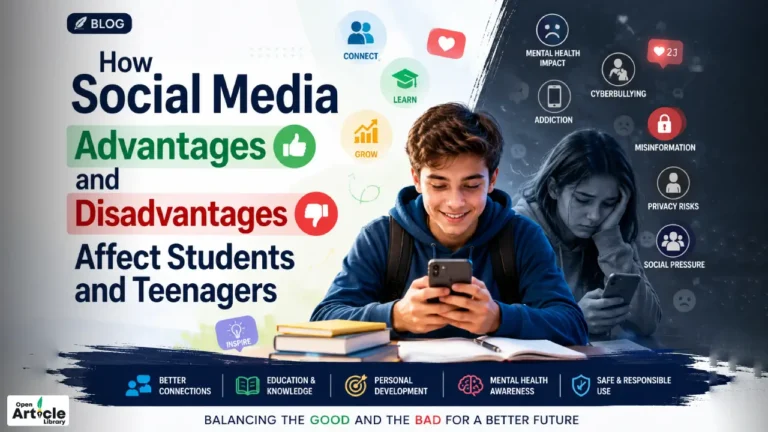
While social media provides many advantages such as global connectivity, learning opportunities, and digital growth, it also brings several challenges.
Issues like mental health problems, cyberbullying, screen addiction, misinformation, privacy concerns, and social pressure have become major concerns in today’s digital world.
Understanding both the advantages and disadvantages of social media is essential for students, parents, businesses, and individuals to use these platforms responsibly and maintain a healthy digital lifestyle.
What Is Social Media?
Social media refers to digital platforms and applications that allow users to create, share, and interact with content online.
These platforms help people connect with friends, family, businesses, influencers, and communities from different parts of the world in real time.
Today, social media has become one of the most powerful communication tools, changing the way people share information, express opinions, and engage with digital content.
Popular platforms such as Instagram, Facebook and YouTube are used daily by billions of people worldwide.
Social media content can include:
- Photos
- Videos
- Stories
- Live streams
- Blogs and articles
- Comments and discussions
- Direct messages
- Podcasts
- Reels and short-form videos
People use social media for many different purposes, including:
- Communication and networking
- Entertainment and relaxation
- News and current updates
- Education and online learning
- Marketing and advertising
- Online shopping and brand discovery
- Career networking and job opportunities
- Building personal brands and online communities
Over the last decade, social media has evolved far beyond simple communication.
It now plays a major role in influencing public opinion, political discussions, fashion trends, consumer behaviour, business marketing, and even mental health.
As technology continues to grow, social media continues to shape modern society and digital culture in powerful ways.
What Are the Advantages and Disadvantages of Social Media?
Social media offers many opportunities, but it also comes with several drawbacks.
Advantages of Social Media
1. Better Communication
It makes communication faster and easier than ever before. It helps people stay connected with friends, family, and colleagues from anywhere in the world through messages, video calls, posts, and real-time updates.
2. Learning and Awareness
Platforms like YouTube provide access to educational videos, tutorials, and informative content. Students and professionals can learn new skills, improve their knowledge, explore different languages, and stay updated on career-related topics from anywhere in the world.
3. Business Growth and Marketing
Social media has become a powerful tool for business growth and online marketing. Businesses use platforms like Facebook, Instagram, youtube to promote products, run targeted advertisements, increase brand awareness, and connect directly with customers. It is one of the most affordable and effective digital marketing methods available today.
4. Career Opportunities
Social media has opened the door to many new career opportunities in the digital industry. It has created jobs for content creators, influencers, digital marketers, video editors, graphic designers, social media managers, and brand strategists, allowing people to build successful careers online.
5. Entertainment
It provides endless entertainment through videos, memes, reels, podcasts, live streams, and trending content. People use these platforms to relax, stay entertained, and discover new creators, music, movies, and viral trends.
Disadvantages of Social Media
1. Addiction and Time Waste
One of the biggest disadvantages of social media is addiction and excessive screen time. Many users spend hours scrolling through feeds, watching videos, and checking notifications, which can reduce productivity, affect concentration, and waste valuable time.
2. Mental Health Issues
Excessive use of social media can negatively affect mental health. Constant comparison, online pressure, and excessive screen time may lead to anxiety, stress, depression, loneliness, and low self-esteem, especially among teenagers and young adults.
3. Fake News and Misinformation
Social media allows information to spread rapidly, but not all of it is accurate. Fake news, misleading content, and rumors can quickly create confusion, panic, and misunderstanding among people.
4. Privacy Concerns
Sharing personal information on social media can create serious privacy risks. Photos, contact details, and personal data may be misused, leaked, or stolen by cybercriminals, leading to fraud, identity theft, or online scams.
5. Cyberbullying
Cyberbullying has become a major issue on social media platforms. Online harassment, abusive comments, and bullying can seriously affect mental health, especially among teenagers and young adults, leading to stress, anxiety, and emotional trauma.
What Are the Challenges and Concerns of Social Media?
Although social media continues to grow rapidly, several challenges affect users worldwide.
Privacy and Data Security
Many social media platforms collect user data for advertising, tracking, and analytics purposes. This raises serious concerns about how personal information is stored, shared, and protected. In some cases, data breaches or cyberattacks can expose sensitive user information online.
Mental Health Pressure
Social media often creates pressure to appear good looking online. Many users compare themselves to influencers, celebrities, and unrealistic lifestyles shown on the internet. Constant exposure to edited photos and highlight moments can negatively affect confidence, self-esteem, and emotional well-being.
Screen Addiction
These platforms are designed to keep users engaged for long periods through endless scrolling, notifications, reels, and personalized content. Excessive screen time can lead to unhealthy habits, reduced productivity, poor sleep quality, and less face-to-face interaction.
Online Harassment
Hate comments, trolling, cyberbullying, and online harassment have become common issues on social media. Negative online behaviour can emotionally affect users, damage mental health, and create a toxic digital environment, especially for teenagers and young adults.
Spread of Harmful Content
Some social media platforms may expose users to violent, misleading, inappropriate, or harmful content without proper moderation. False information and harmful trends can influence people negatively and create confusion, fear, or unhealthy behaviour online.
What Are the Different Social Media Platforms and Their Impact?
Different platforms serve different purposes and audiences.
Facebook is one of the most widely used social media platforms for connecting with friends, family, and communities.
Users can share updates, photos, videos, and join groups based on their interests. Businesses also use Facebook for advertising, customer engagement, and brand promotion.
Instagram is a highly visual platform that focuses on photos, reels, stories, and influencer content.
It has a strong impact on fashion, beauty, travel, fitness, and lifestyle trends, making it one of the most powerful platforms for influencers and businesses.
TikTok
TikTok revolutionized short-form video content with viral trends, creative challenges, and entertaining clips.
The platform has become extremely popular among younger audiences and has created massive opportunities for content creators and influencers.
YouTube
YouTube is one of the largest video-sharing platforms used for education, tutorials, entertainment, gaming, music, and long-form content creation.
It allows creators and businesses to reach global audiences through informative and engaging videos.
LinkedIn is a professional networking platform designed for career growth, job opportunities, and business connections.
Professionals use it to build networks, share industry knowledge, and explore career development opportunities.
X (formerly twitter)
X is mainly used for real-time news updates, trending discussions, public conversations, and opinion sharing.
It plays a major role in spreading information quickly and influencing public discussions worldwide.
Pinterest is a visual discovery platform where users explore and save ideas through images and pins.
It is widely used for inspiration related to fashion, home decor, recipes, travel, DIY projects, and lifestyle trends.
Businesses also use Pinterest to drive website traffic and promote products visually.
Reddit is a community-based platform where users join discussions, share opinions, ask questions, and explore topics through different communities called subreddits.
It is popular for real-time discussions, expert advice, trending news, and community-driven content.
Quora
Quora is a question-and-answer platform where users can ask questions and receive answers from experts, professionals, and other community members.
It is commonly used for gaining knowledge, learning new topics, sharing experiences, and finding detailed answers on various subjects.
Each social media platform impacts society differently by shaping communication styles, online trends, opinions, consumer behaviour, and digital interactions.
What Is the Impact of Social Media on Society and Human Behaviour?
Social media has transformed human behaviour in both positive and negative ways.
Positive Impact
- Increased global connectivity
- Faster communication
- Better access to information
- Growth of online businesses
- Support for social movements and awareness campaigns
Social media also helps small businesses reach larger audiences without requiring massive marketing budgets.
Negative Impact
- Reduced face-to-face communication
- Shorter attention spans
- Social comparison and insecurity
- Emotional dependence on likes and followers
- Increased anxiety and loneliness
Many users seek online validation through comments, likes, and shares. This can affect confidence and emotional stability over time.
Social media also influences buying decisions, opinions, fashion trends, and even political beliefs.
What Are the Career Opportunities and Job Market for Social Media Marketers?
The growth of digital platforms has created huge demand for social media professionals.
Popular career options include:
- Social Media Manager
- Content Creator
- Influencer Marketing Specialist
- Digital Marketing Executive
- SEO Specialist
- Video Editor
- Graphic Designer
- Paid Ads Expert
- Brand Strategist
- Community Manager
Businesses of all sizes now invest heavily in digital marketing and online branding. Skilled professionals who understand audience behaviour, advertising strategies, and content creation are in high demand.
Freelancing opportunities have also increased. Many marketers work independently and manage clients worldwide through remote work.
Social Media and Cyberbullying
Cyberbullying has become one of the most serious dangers of social media in today’s digital world.
Unlike traditional bullying, online harassment can happen anytime and spread rapidly across multiple platforms, making it difficult for victims to escape or recover emotionally.
Cyberbullying can include:
- Harassment and abusive messages
- Online threats and intimidation
- Spreading fake rumours or misinformation
- Public humiliation and trolling
- Offensive comments and hate speech
- Sharing private photos or personal information without permission
Teenagers and young users are especially vulnerable to online bullying because they spend a significant amount of time on social media platforms.
Victims of cyberbullying may experience stress, anxiety, depression, loneliness, emotional trauma, and low self-confidence.
The negative effects of cyberbullying can impact mental health, academic performance, relationships, and overall well-being.
In severe cases, continuous online harassment may even lead to serious emotional and psychological issues.
To reduce cyberbullying, schools, parents, communities, and social media companies must work together to create safer and more supportive online environments.
Encouraging respectful online behaviour, reporting abusive content, and promoting digital awareness are important steps toward preventing online harassment.
Social Media and Mental Health Risks
Excessive use of social media and constant exposure to negative content can seriously affect mental and emotional well-being.
Issues such as cyberbullying, loneliness, social pressure, and unrealistic online expectations may increase feelings of stress, anxiety, and emotional exhaustion.
Many users, especially teenagers and young adults, often compare their lives, appearance, or success with influencers and other people online.
Constant comparison and the pressure to appear perfect on social media can make individuals feel isolated, insecure, or emotionally overwhelmed.
Research suggests that unhealthy social media habits may contribute to depression, low self-esteem, anxiety, and emotional distress, particularly among younger audiences who spend long hours online.
Some common warning signs may include:
- Sudden withdrawal from social activities
- Emotional instability or mood swings
- Sleep problems and fatigue
- Increased anxiety or stress
- Negative self-talk and low confidence
- Loss of interest in daily activities
Creating awareness about mental health and encouraging healthy social media habits are extremely important.
Supportive communication from family, friends, teachers, and communities can help individuals manage emotional challenges and maintain a healthier relationship with social media.
What Can Parents Do to Help Children Use Social Media Safely?
Parents play a very important role in helping children and teenagers use social media responsibly and safely.
Proper guidance, communication, and monitoring can help reduce the negative effects of excessive social media usage.
Encourage Open Communication
Parents should create a comfortable and supportive environment where children feel safe discussing their online experiences, problems, or cyberbullying incidents.
Open communication helps parents understand challenges children may face on social media platforms.
Set Healthy Screen Time Limits
Excessive screen time can affect sleep, focus, physical health, and mental well-being.
Setting balanced screen time limits encourages children to maintain healthier daily routines and avoid social media addiction.
Monitor Online Activity
Parents should stay aware of the social media platforms their children use and the type of content they consume online.
Monitoring online activity can help identify harmful content, inappropriate behaviour, or online risks at an early stage.
Teach Online Safety and Privacy
Children should be educated about online safety and responsible internet usage. Parents must teach them:
- Not to share personal or private information online
- How to report harmful or inappropriate content
- How to block strangers, scammers, or cyberbullies
- The importance of strong passwords and account privacy
Promote Offline Activities
Encouraging children to participate in sports, hobbies, reading, outdoor activities, and family time can help reduce dependence on social media.
Offline activities support better physical health, creativity, confidence, and social interaction.
Lead by Example
Children often follow the habits of their parents. Maintaining healthy screen habits and responsible social media usage at home can positively influence children’s behaviour and digital lifestyle.
By providing guidance, emotional support, and digital awareness, parents can help children enjoy the benefits of social media while staying safe from its harmful effects.
What Is the Impact of Social Media on Different Age Groups?
Social media affects people differently depending on their age, lifestyle, and online habits.
While it offers communication, learning, and entertainment benefits, excessive or unhealthy usage can also create negative effects on mental health, behaviour, and daily life.
Children
Children can become addicted to screens and social media at an early age if usage is not properly monitored.
Exposure to inappropriate content, online strangers, and excessive screen time are major concerns for parents.
Social media may also reduce physical activity, outdoor play, and face-to-face social interaction among children.
Teenagers
Teenagers are among the most active social media users and are highly influenced by online trends, peer pressure, influencers, and social comparison.
Constant exposure to unrealistic lifestyles and online validation can affect self-confidence, mental health, emotional well-being, and academic performance.
Cyberbullying and social pressure are also common challenges faced by teenagers online.
Adults
Adults use social media for communication, networking, entertainment, news updates, business promotion, and career growth.
Many businesses and professionals rely on social media for marketing and customer engagement.
However, excessive usage can increase stress, reduce productivity, disturb work-life balance, and create unhealthy screen habits.
Older Adults
Older adults use social media to stay connected with family members, friends, and communities.
It helps reduce loneliness, improve communication, and provide access to news, entertainment, and online learning.
Social media can also help older generations feel more socially connected in today’s digital world.
Overall, social media impacts every age group differently. Responsible usage, digital awareness, and healthy online habits are important for maintaining a positive and balanced relationship with social media.
Conclusion
Social media has become an important part of modern life and continues to influence the way people communicate, learn, work, and interact with the world.
It provides many benefits, including better communication, entertainment, education, business growth, career opportunities, and global connectivity.
However, along with these advantages, social media also brings several challenges such as cyberbullying, privacy concerns, misinformation, screen addiction, and mental health issues.
Excessive or irresponsible use of social media can negatively affect emotional well-being, productivity, relationships, and overall lifestyle.
The key to using social media effectively is maintaining a healthy balance and staying aware of its impact.
Responsible usage, digital awareness, parental guidance, and healthy online habits can help individuals enjoy the positive side of social media while reducing its harmful effects.
As technology continues to grow and evolve, social media will remain one of the most powerful tools shaping society, communication, and human behaviour in the digital age.